

Applying to fashion college is not about loving clothes or following the latest trends. It is also not about making beautiful sketches. If you want to study fashion at a university and get a diploma or degree you need to show that you are ready for a lot of hard work in creative, technical and academic areas.
People who decide who gets into the fashion programs at universities like University of the Arts London Central Saint Martins and London College of Fashion they do not just look at your finished fashion drawings. They want to know how you think and come up with ideas. They want to see how you do research and how you use pictures to communicate. They also want to know if you have the skills to turn your ideas into designs.. They want to know why you want to study fashion so badly.
If you want to go to a fashion school like Istituto Marangoni, Parsons School of Design or Fashion Institute of Technology you should start getting ready early.
To apply to fashion college you will probably need a things. You will need a portfolio that shows your work. You will need papers from your school. You will need to write a statement about yourself. You will need to prove that you can speak English.. Sometimes you will need to do an interview or a special project or write something. What you need exactly will depend on the country you're in the school you want to go to, what kind of degree you want and what course you want to take. So you need to look into each school carefully before you apply.
This guide will help you get ready, for fashion college. It will tell you what the people who decide who gets in are usually looking for. It will tell you how to make your portfolio better.. It will tell you what skills you should learn before you send in your application to fashion college.
People who decide who gets into the fashion programs at universities like University of the Arts London Central Saint Martins and London College of Fashion they do not just look at your finished fashion drawings. They want to know how you think and come up with ideas. They want to see how you do research and how you use pictures to communicate. They also want to know if you have the skills to turn your ideas into designs.. They want to know why you want to study fashion so badly.
If you want to go to a fashion school like Istituto Marangoni, Parsons School of Design or Fashion Institute of Technology you should start getting ready early.
To apply to fashion college you will probably need a things. You will need a portfolio that shows your work. You will need papers from your school. You will need to write a statement about yourself. You will need to prove that you can speak English.. Sometimes you will need to do an interview or a special project or write something. What you need exactly will depend on the country you're in the school you want to go to, what kind of degree you want and what course you want to take. So you need to look into each school carefully before you apply.
This guide will help you get ready, for fashion college. It will tell you what the people who decide who gets in are usually looking for. It will tell you how to make your portfolio better.. It will tell you what skills you should learn before you send in your application to fashion college.
What Does “Fashion College” Mean?
In countries fashion college can mean different things. Some programs are courses or certificates. Others are college programs that give you a degree like a BA or BFA.
If you want a degree from a college look for programs like:
- BA Fashion Design
- BFA Fashion Design
- BA Fashion Communication
- BA Fashion Styling
- BA Fashion Marketing
- BA Textile Design
- BA Fashion Illustration
- BA Costume Design
- MA Fashion Design
- MA Fashion Business
- MA Luxury Brand Management
The name of the degree can be different depending on the country and college. For example colleges in the UK often give BA Honours degrees. Many schools in the US give BFA or AAS degrees for fashion design.
Before picking a college it's an idea to compare different fashion education systems. This is especially important if you're choosing between colleges in the USA, UK, Italy, France or another country. If you want to study in colleges you can read our guide to best fashion design universities in the USA.

What Do Fashion Colleges Look For?
Fashion colleges are not looking only for students who can draw a polished outfit. A beautiful fashion sketch can help your application, but it is rarely enough on its own.
Most fashion degree programs want to see that you can:
- research a theme or concept;
- develop visual ideas step by step;
- experiment with shape, color, texture, and silhouette;
- communicate garments clearly through drawing or digital tools;
- understand basic fashion proportions;
- show curiosity about fashion, art, culture, and society;
- reflect on your own creative process;
- present your work in a clear and organized way.
A fashion school portfolio should show both imagination and structure. It needs to communicate not only what you can draw, but how you think as a future designer, illustrator, stylist, or fashion professional.
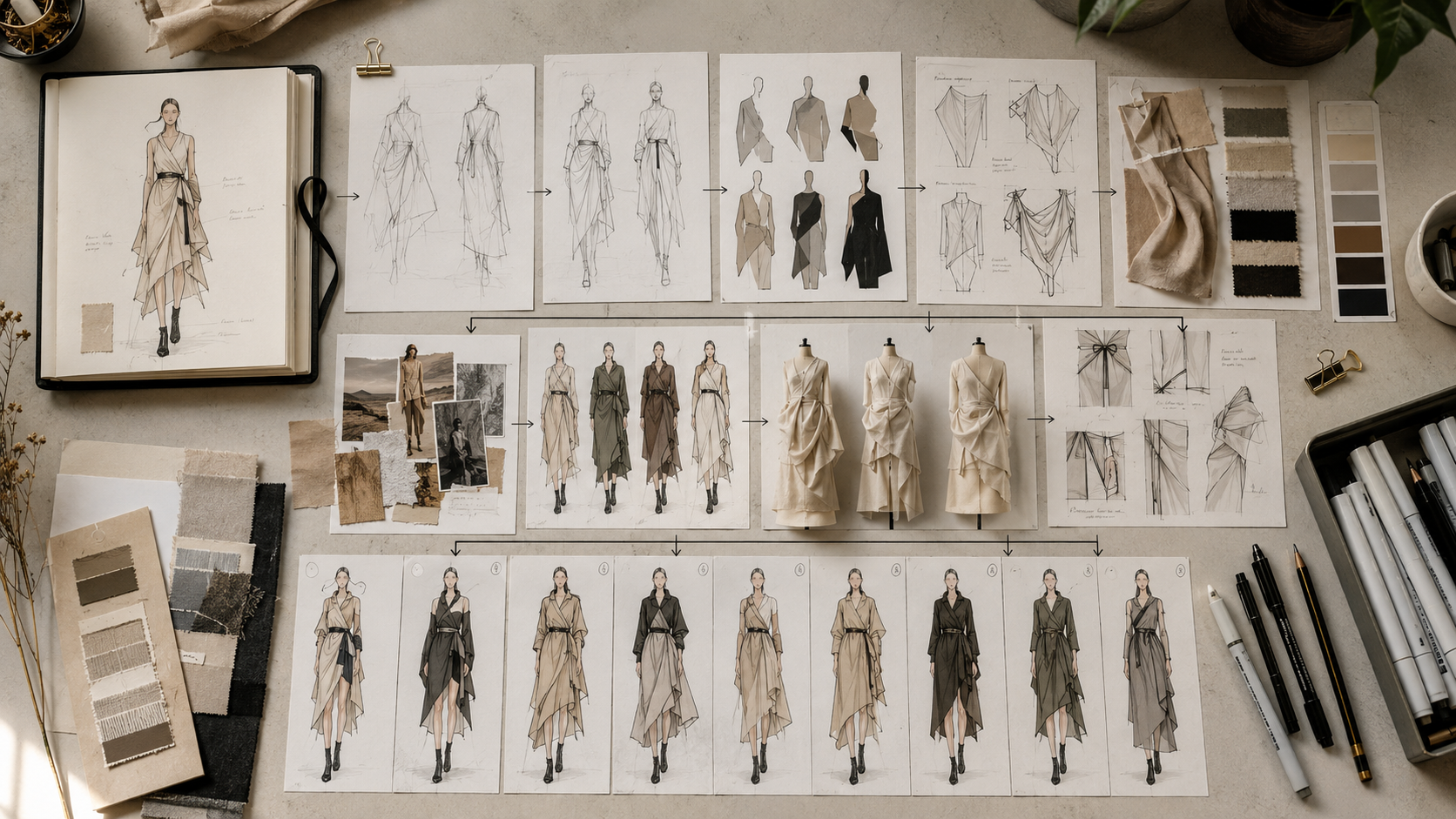
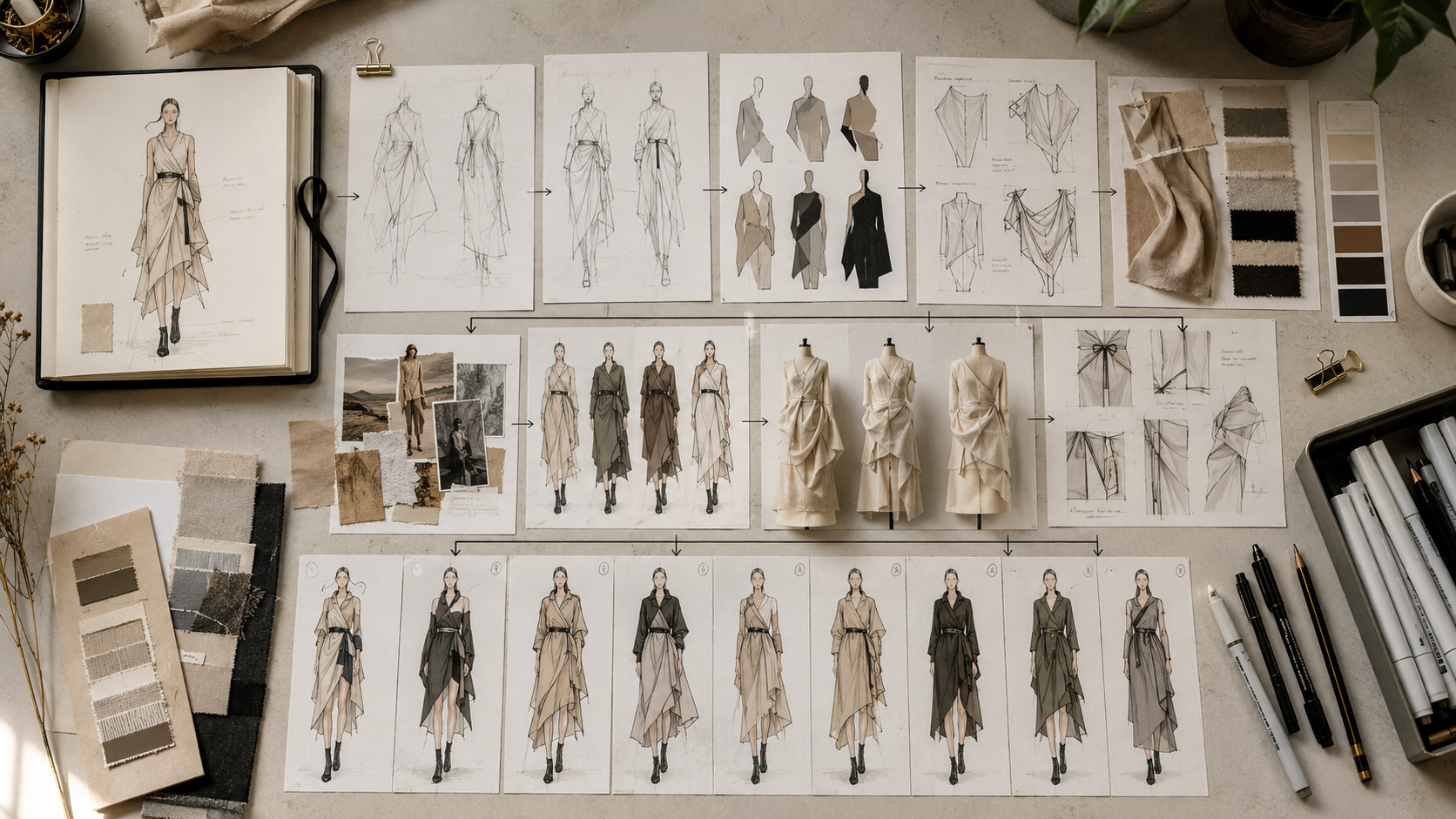
This is one of the biggest differences between casual fashion drawing and portfolio preparation. When you are looking at a portfolio the last picture is very important. The work that went into making that picture is also very important. The portfolio is like a story and the final image is the ending but what happened before that is just as interesting. The development behind the image, in the portfolio is what makes it really good.
General Fashion School Admission Requirements
Every university has its own application process, so you should always check the official course page before applying. However, most fashion degree programs usually ask for several core elements.

Academic Documents
When applying for fashion programs you usually need to show that you finished high school. This can be a high school diploma, A-levels, IB, foundation diploma or something similar.
For example, Istituto Marangoni says that if you want to apply for a bachelors degree you typically need a secondary school diploma that took 12 years to complete. You also need to prove you can speak English if the program is taught in English.
In the United States things work a bit differently. Fashion Institute of Technology says that high school students often apply for an associates degree first. Then they can continue towards a bachelors degree after finishing the part.
Before you apply make sure you know what kind of program it is. Is it a bachelors degree, associate degree, foundation year, diploma or postgraduate program? This affects what documents you need to provide and what kind of portfolio you have to show.
English Language Requirements
If you want to study a fashion degree taught in English and English is not your language you need to show proof that you can understand and use English well.
This proof can be in the form of test results like IELTS, TOEFL, Duolingo English Test or Pearson. It depends on which university you are applying to.
The English language requirements are different for each school, course and degree level.
So it is always best to check the course page before you apply.
English requirements are very important for students from countries.
This is because studying fashion includes a lot of writing talking and giving presentations.
You will have to write research papers give presentations and talk to your teachers.
Even if you have a portfolio you still have to meet the English language requirements of the university.
You need to show that you can understand and use English well to succeed in your fashion degree.
The English language requirements are, in place to help you do well in your studies.
This proof can be in the form of test results like IELTS, TOEFL, Duolingo English Test or Pearson. It depends on which university you are applying to.
The English language requirements are different for each school, course and degree level.
So it is always best to check the course page before you apply.
English requirements are very important for students from countries.
This is because studying fashion includes a lot of writing talking and giving presentations.
You will have to write research papers give presentations and talk to your teachers.
Even if you have a portfolio you still have to meet the English language requirements of the university.
You need to show that you can understand and use English well to succeed in your fashion degree.
The English language requirements are, in place to help you do well in your studies.
Fashion Portfolio
The fashion portfolio is the important thing when you apply to a school. It is where you show what you can do. You should put your ideas and drawings in the fashion portfolio. You should also show how you came up with your designs and what you did to make them better.
A good fashion portfolio for a fashion college may have things like:
fashion sketches;
life drawing or figure drawing;
mood boards;
research pages;
fabric and texture studies;
color palettes;
fashion illustration;
technical flats;
garment development;
sewing or construction projects;
photography of finished garments;
sketchbook pages;
digital design work.
life drawing or figure drawing;
mood boards;
research pages;
fabric and texture studies;
color palettes;
fashion illustration;
technical flats;
garment development;
sewing or construction projects;
photography of finished garments;
sketchbook pages;
digital design work.
Parsons School of Design thinks the fashion portfolio is very important. They say you can use kinds of media not just things about fashion. FIT also looks at portfolios, for students who want to study art and design including fashion.
So you should not wait until the minute to make your fashion school portfolio. You need to take your time and make sure it is good. You should also ask people for their opinion. Use their feedback to make your fashion portfolio better. A strong fashion portfolio takes time to make.
Personal Statement or Motivation Letter
When you apply to fashion college they usually ask you to write a statement. This is your chance to tell them why fashion is what you want to study. You can talk about what inspires you and the kind of designer you want to be. You should also say why you want to go to that school.
Your personal statement should be special and not sound like everyone. Do not just say things like I have always loved fashion. That is not enough. You need to tell a story about why fashion's important to you. You can talk about the things that inspire your creativity, the people who influence you the projects you have worked on where you come from what you have learned and what you want to achieve in the future.
A good personal statement should answer some questions. What is it about fashion that you like? Why do you want to take this course? Why do you want to go to this university? What are the things that interest you and what do you want to learn more about? What do you hope to achieve while you are studying? How does the work you have done far show that you are a good fit, for the course you are applying for?
Your personal statement should be special and not sound like everyone. Do not just say things like I have always loved fashion. That is not enough. You need to tell a story about why fashion's important to you. You can talk about the things that inspire your creativity, the people who influence you the projects you have worked on where you come from what you have learned and what you want to achieve in the future.
A good personal statement should answer some questions. What is it about fashion that you like? Why do you want to take this course? Why do you want to go to this university? What are the things that interest you and what do you want to learn more about? What do you hope to achieve while you are studying? How does the work you have done far show that you are a good fit, for the course you are applying for?
Interview or Creative Task
Some schools want to meet the people who apply or they want them to do a project. This happens a lot in art and design schools because they want to know how you think, not just see the things you have made.
When you have an interview they might ask you things like:
Why do you want to take this course?
What is the best thing you have done far?
How do you come up with ideas for your projects?
Who are the designers or artists that you really like?
What do you think you need to work on to get better?
Why do you want to study fashion in college?
Why do you want to take this course?
What is the best thing you have done far?
How do you come up with ideas for your projects?
Who are the designers or artists that you really like?
What do you think you need to work on to get better?
Why do you want to study fashion in college?
The best way to get ready, for this is to know your own work. You should be able to tell them what made you want to do each project how your ideas changed along the way what you learned from doing it and what you would do differently if you had time.
You should know your portfolio well and be able to talk about each thing you have made.
This will help you do a job when you meet with the school.
You should know your portfolio well and be able to talk about each thing you have made.
This will help you do a job when you meet with the school.
Fashion Design Portfolio Requirements: What Schools Usually Expect
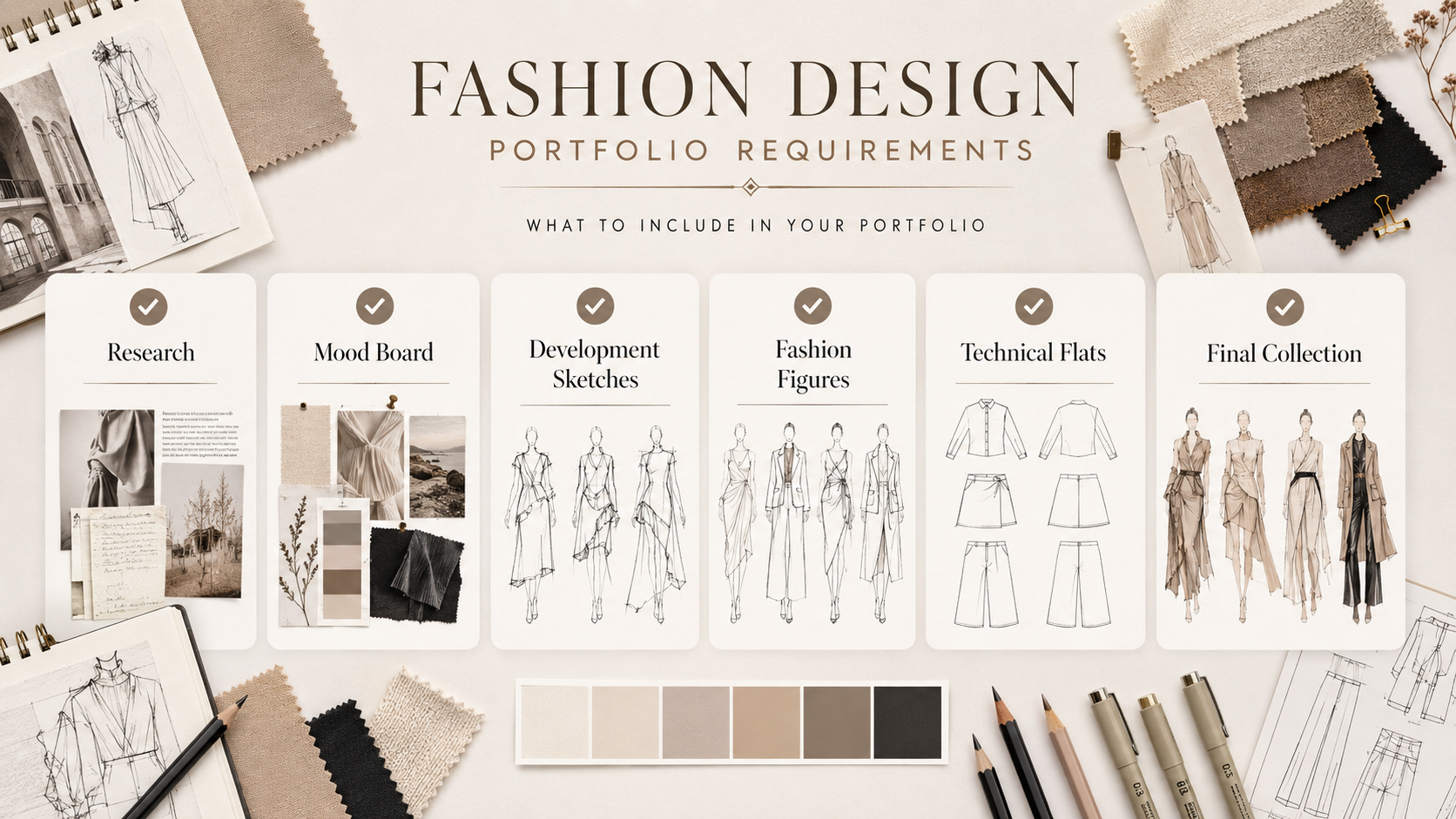
When you are putting together a fashion design portfolio you need to know what schools are looking for. Fashion design portfolio requirements are different at each university. They all want to see the same things: they want to see that you can think creatively that you can communicate your ideas in a visual way and that you can develop those ideas.
Your fashion design portfolio should not look like something you would see in a store. It should be like a story, about how you came up with your ideas. The people who review your portfolio want to see how you started with an idea, how you worked on it what you tried and how you ended up with the result. They want to see the process of creating your fashion design.
Your fashion design portfolio should have a different types of pages.
Your fashion design portfolio should not look like something you would see in a store. It should be like a story, about how you came up with your ideas. The people who review your portfolio want to see how you started with an idea, how you worked on it what you tried and how you ended up with the result. They want to see the process of creating your fashion design.
Your fashion design portfolio should have a different types of pages.
Research Pages
Fashion schools want to see that your designs are based on research. This research can come from areas like art, buildings, past events, pictures, groups of people the natural world, memories, fabrics, social issues or things happening today.
A mood board should not just be a mix of images from Pinterest. It should clearly show your design idea. Include pictures, colors, materials, textures, important words and references that back up your design.
Good research is not about collecting lots of pictures. It's, about choosing references that help explain your idea.
A mood board should not just be a mix of images from Pinterest. It should clearly show your design idea. Include pictures, colors, materials, textures, important words and references that back up your design.
Good research is not about collecting lots of pictures. It's, about choosing references that help explain your idea.
Development Sketches
This is one of the most important parts of the portfolio. Design development shows how one idea becomes many variations.
You can include:
- rough sketches;
- silhouette experiments;
- shape studies;
- fabric tests;
- color variations;
- draping experiments;
- collage;
- garment details;
- alternative design options;
- notes explaining your decisions.
Admissions teams often value development pages because they reveal your thinking process. A perfect final illustration is less convincing if the school cannot see how you developed the idea.
Fashion Sketching and Figure Drawing
Fashion sketching is an important skill for people who want to apply to fashion design. You do not have to be an artist to start with but you should be able to draw the basic shape of clothes how they fit, how the fabric moves and what the clothes look like.
You should also be able to show your ideas for styling.
You should also be able to show your ideas for styling.
Strong fashion sketches usually have
- confident fashion figure proportions;
- clear shapes of the clothes;
- a good understanding of how fabric behaves;
- interesting silhouettes;
- attention to all the little details;
- personal style;
- a clean and easy to look at presentation..
If you want to learn the basics of drawing fashion figures, clothes, fabrics and how to show a collection of clothes you can take an online fashion illustration course. This can be really helpful before you apply to a fashion college because it will help you show your ideas in an confident way. Fashion sketching is what will help you do this. By learning fashion sketching and figure drawing you will be able to present your fashion ideas in a way.
Technical Skills
When you apply to a program you have to show that you know about the side of things. For people who want to study fashion design this means you should know about:
You do not have to be an expert at making patterns to apply for a fashion degree but it is a good idea to show that you know the basics of how to put a garment together. This shows the school that you can think about clothes in a way not just imagine what they look like. Fashion design is not about thinking of pretty clothes it is also about knowing how to make them real. Showing that you have some skills, like garment construction and fabric knowledge can make your portfolio more impressive.
- flat drawings
- pattern awareness
- how to construct a garment
- making sewing samples
- knowing about fabrics
- taking pictures of the clothes you have made
- trying out draping or styling ideas
You do not have to be an expert at making patterns to apply for a fashion degree but it is a good idea to show that you know the basics of how to put a garment together. This shows the school that you can think about clothes in a way not just imagine what they look like. Fashion design is not about thinking of pretty clothes it is also about knowing how to make them real. Showing that you have some skills, like garment construction and fabric knowledge can make your portfolio more impressive.
Digital Fashion Illustration
Digital work can also become part of a fashion college portfolio, especially if it supports your concept and shows strong visual communication. If your portfolio includes digital fashion sketches, a fashion illustration in Procreate course can help you practice clean fashion figures, digital textures, garment details, and presentation-ready portfolio pages.
However, digital illustrations should not replace research, development sketches, and original concept work. Admissions teams usually want to see both the final result and the creative process behind it.
A polished digital illustration can look impressive, but it should still connect to your research, sketches, and design development.
Final Outcomes
The final outcomes can be things. These may include:
These outcomes should look good. They should also clearly link to your research and development.
Your final pages should answer these three questions:
What was your main concept?
How did your idea grow?
Why is your final result a choice?
- Completed fashion illustrations
- Photos of garments
- Digital boards
- Collection pages
- Textile designs
- Styled shoots
These outcomes should look good. They should also clearly link to your research and development.
Your final pages should answer these three questions:
What was your main concept?
How did your idea grow?
Why is your final result a choice?
What We Often See in Beginner Fashion Portfolios
When I work with students who are learning fashion illustration and making portfolios I notice that they do the thing. Beginners want to make one really good drawing away. They try to make one fashion picture instead of showing how they came up with the idea tried it out changed it and made it better.
This can be a problem when they are trying to get into fashion college. A portfolio for college is not a collection of finished pictures. It should show how you think and come up with ideas. Even a simple page from a sketchbook with a different silhouette ideas can be more helpful than one perfect picture that does not explain how you got there.
That is why making a portfolio should include practicing drawing and developing ideas. Drawing fashion pictures helps you show what you mean. The pages where you work out your ideas help the school understand how you think and come up with ideas.
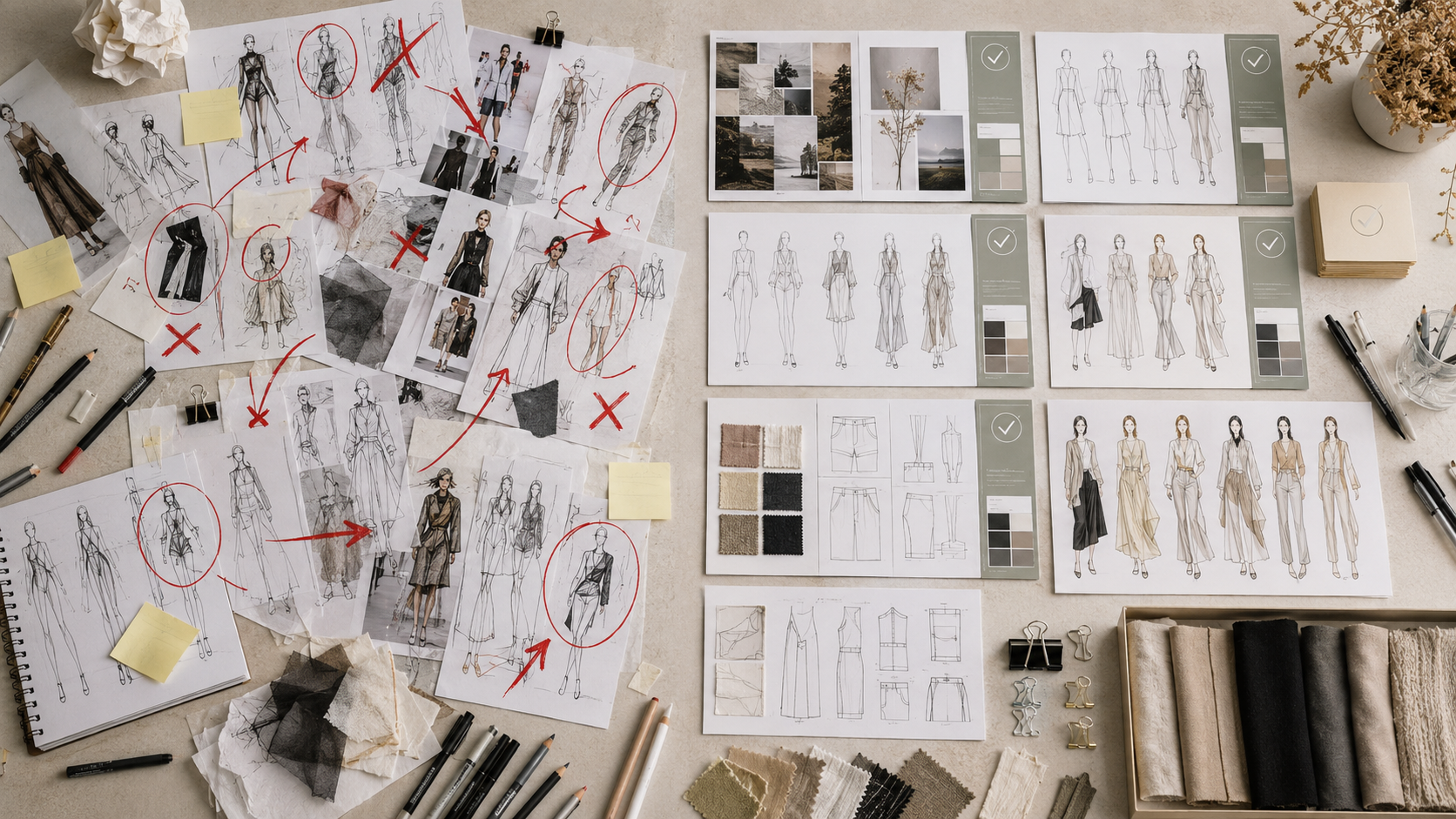
Another thing that students do wrong is try to make every page in their portfolio look perfect.. The truth is, the people who look at portfolios for college admissions want to see that you tried different things and learned from them. If you have pages with drawings that you crossed out or different ideas for silhouettes or tests of fabrics and notes about what you were thinking it makes your portfolio feel more real and like you put thought, into it.
This can be a problem when they are trying to get into fashion college. A portfolio for college is not a collection of finished pictures. It should show how you think and come up with ideas. Even a simple page from a sketchbook with a different silhouette ideas can be more helpful than one perfect picture that does not explain how you got there.
That is why making a portfolio should include practicing drawing and developing ideas. Drawing fashion pictures helps you show what you mean. The pages where you work out your ideas help the school understand how you think and come up with ideas.
Another thing that students do wrong is try to make every page in their portfolio look perfect.. The truth is, the people who look at portfolios for college admissions want to see that you tried different things and learned from them. If you have pages with drawings that you crossed out or different ideas for silhouettes or tests of fabrics and notes about what you were thinking it makes your portfolio feel more real and like you put thought, into it.
Top Fashion Universities to Research
There is not one fashion university that is perfect for everyone. The best choice for you will depend on what you want to do how money you have, which country you want to be in what language you speak, which city you like and whether you want to learn about designing clothes, styling talking to people the business side of things making fabrics or selling fashion.
This part is just to get you started. It is not meant to take the place of looking into each university. It just gives you some ideas, about schools that people who want to work in fashion often think about.
This part is just to get you started. It is not meant to take the place of looking into each university. It just gives you some ideas, about schools that people who want to work in fashion often think about.
University of the Arts London, UK
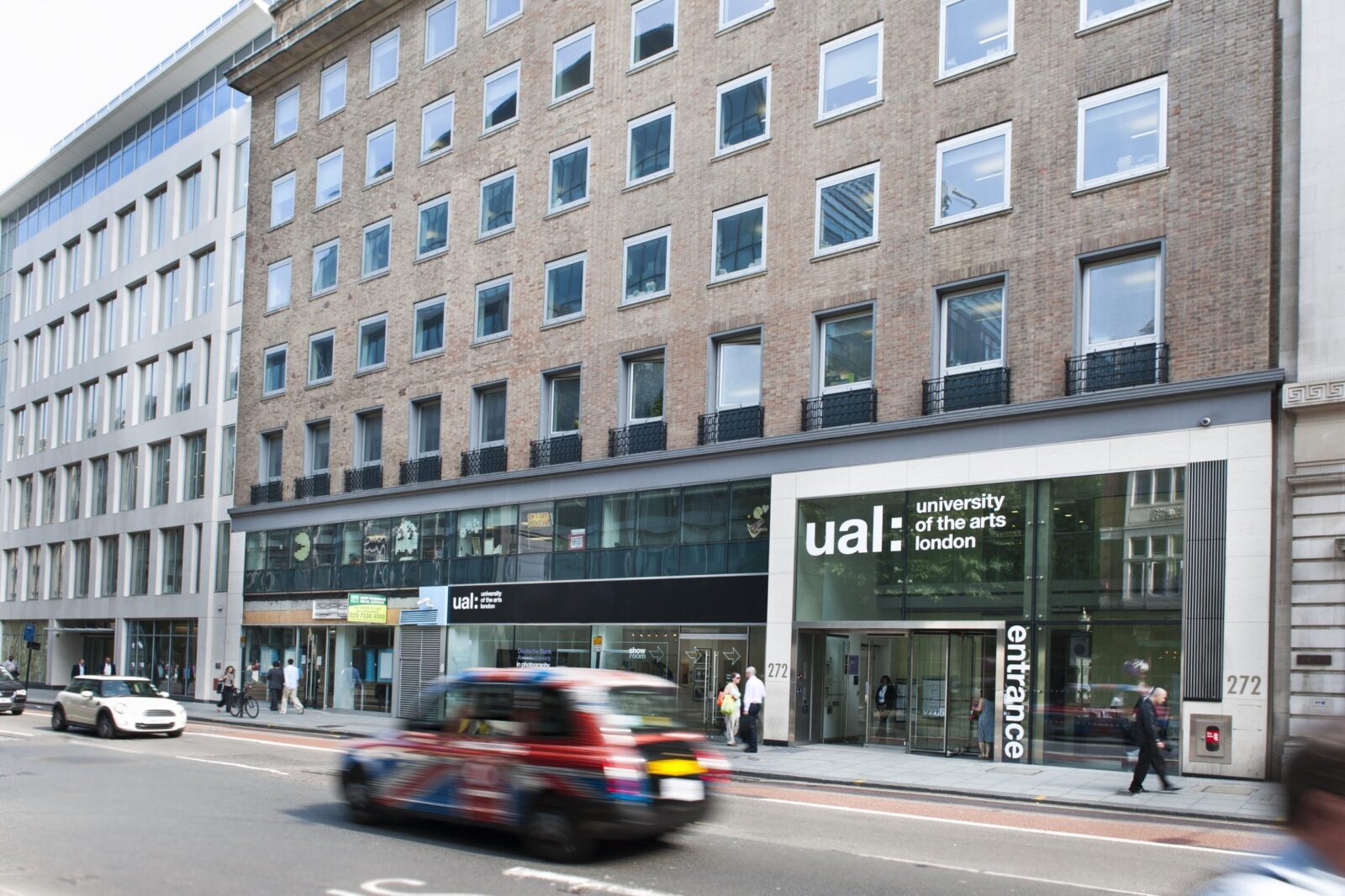
University of the Arts London is one of the most recognized creative universities in the world and includes several influential colleges, such as Central Saint Martins and London College of Fashion.
UAL can be a strong choice for students who want to study fashion in London and explore a broad creative environment with access to design, media, business, sustainability, and innovation pathways.
Central Saint Martins, UK
Central Saint Martins is part of the University of the Arts London. It is especially known for fashion design that thinks outside the box trying things and a strong creative vibe.
People who want to do their thing with fashion often think of Central Saint Martins. This is because it has a reputation for helping students create their unique fashion style.
If you are applying to study fashion design your portfolio should not just have drawings.
It should also show that you have done your research tried things developed your ideas experimented and have your own point of view on fashion design, at Central Saint Martins.
You need to show that you are a student who can think for yourself and do things differently with fashion at Central Saint Martins.
People who want to do their thing with fashion often think of Central Saint Martins. This is because it has a reputation for helping students create their unique fashion style.
If you are applying to study fashion design your portfolio should not just have drawings.
It should also show that you have done your research tried things developed your ideas experimented and have your own point of view on fashion design, at Central Saint Martins.
You need to show that you are a student who can think for yourself and do things differently with fashion at Central Saint Martins.
London College of Fashion, UK
London College of Fashion is also part of the University of the Arts London. It gives students a lot of ways to learn about fashion. You can study fashion design, communication, styling, the business side of things, beauty, sustainability and innovation at the London College of Fashion.
This is really helpful if you do not know what you want to do in the fashion world. You might want to be a designer or maybe a stylist or possibly a creative director or even a buyer or a fashion marketer or a professional in the fashion media, at the London College of Fashion.
This is really helpful if you do not know what you want to do in the fashion world. You might want to be a designer or maybe a stylist or possibly a creative director or even a buyer or a fashion marketer or a professional in the fashion media, at the London College of Fashion.
Istituto Marangoni, Italy, UK, France, UAE and More
Istituto Marangoni is really famous for teaching people about fashion and design. They also teach about luxury and business. The school has programs that are all about fashion at campuses in different countries.
Istituto Marangoni is a place for students who love fashion and want to learn more about it. If you are interested in Istituto Marangoni and fashion design or maybe luxury fashion or even just styling Istituto Marangoni can help you. They also teach people, about the business side of fashion. How it works around the world, which is what they call international fashion education at Istituto Marangoni.
Istituto Marangoni is a place for students who love fashion and want to learn more about it. If you are interested in Istituto Marangoni and fashion design or maybe luxury fashion or even just styling Istituto Marangoni can help you. They also teach people, about the business side of fashion. How it works around the world, which is what they call international fashion education at Istituto Marangoni.
Parsons School of Design, USA
Parsons School of Designin New York is really well known. It is one of the design schools in the United States. At Parsons School of Design the way they teach fashion is connected to thinking about design trying things studying different subjects being sustainable and knowing what is happening in the world right now.
If you want to study fashion in New York and learn about Parsons School of Design then Parsons School of Design can be a choice for you. You will get to develop your way of designing that is connected to what is happening in the world and working with different kinds of creative people, at Parsons School of Design.
If you want to study fashion in New York and learn about Parsons School of Design then Parsons School of Design can be a choice for you. You will get to develop your way of designing that is connected to what is happening in the world and working with different kinds of creative people, at Parsons School of Design.
Fashion Institute of Technology, USA
Fashion Institute of Technology is part of the State University of New York. It has ties to the fashion industry.
The Fashion Institute of Technology offers programs related to fashion. These include design, business, communication, textiles, accessories and technology.
Many students consider the Fashion Institute of Technology for a fashion education. They want to learn in New York.
The Fashion Institute of Technology offers programs related to fashion. These include design, business, communication, textiles, accessories and technology.
Many students consider the Fashion Institute of Technology for a fashion education. They want to learn in New York.
If you want to compare schools you can read best fashion design universities in the USA.
Other Fashion Schools to Explore
In addition to UAL, Central Saint Martins, London College of Fashion Istituto Marangoni, Parsons and FIT you may also want to check out these schools:
Royal Academy of Fine Arts Antwerp;
Bunka Fashion College;
ESMOD;
Polimoda;
Institut Français de la Mode;
SCAD;
Rhode Island School of Design;
Royal College of Art for postgraduate study;
NABA;
IED.
Bunka Fashion College;
ESMOD;
Polimoda;
Institut Français de la Mode;
SCAD;
Rhode Island School of Design;
Royal College of Art for postgraduate study;
NABA;
IED.
When comparing fashion schools don't just pick one based on its reputation. Think about what you will learn in the course. Look at what students have made. See what jobs graduates get. Consider where the school is located. Check how much it costs and what scholarships are available. Find out what you need to include in your portfolio.
Make sure the program helps you achieve your goals in fashion. The fashion school you choose is a decision. Look at all the options. Research each school. Make a choice that's right, for you and your fashion goals.
Make sure the program helps you achieve your goals in fashion. The fashion school you choose is a decision. Look at all the options. Research each school. Make a choice that's right, for you and your fashion goals.
How to Start Preparing for Fashion College
Getting ready for fashion college is a lot simpler when you break it down into tasks. Fashion college preparation is easier when you take it one step at a time. You do not have to do everything all at but you really need to have a clear plan for fashion college. This will help you stay on track, with your fashion college preparation. Fashion college is a deal and having a plan makes it more manageable.
Step 1: Choose Your Direction
Before building a portfolio, decide which path interests you most:
- fashion design;
- fashion illustration;
- fashion styling;
- fashion communication;
- fashion business;
- textile design;
- costume design;
- luxury brand management;
- digital fashion;
- sustainable fashion.
Your portfolio should match your chosen direction. A fashion design portfolio will not look the same as a fashion communication, styling, or fashion marketing portfolio.
If you are still exploring possible future paths, our article on career options in fashion illustration can help you understand how drawing, visual storytelling, and fashion presentation skills can be used professionally.
Step 2: Research Schools and Course Requirements
You should not make one portfolio that you will send to every university. Each university has its rules and things it wants to see. Some universities want things done a way and they have different deadlines. They also have rules for the pictures you can send and they want you to answer different questions. Some universities even want to talk to you before they say yes or no.
Create a list with the following things:
- school name;
- course name;
- degree type;
- country and city;
- deadline;
- portfolio format;
- number of pages or slides;
- required documents;
- language score;
- tuition fee;
- scholarship options;
- interview requirements.
Before you apply to a university you should always look at the website for the course you want to take. Do not just look at what other studentsre saying or what it says on other websites that talk about getting into university. The rules can change every year so you need to make sure you have the up to date information, about the Schools and Course Requirements.
Step 3: Build Drawing and Fashion Sketching Skills
Even if your future course includes business or styling, drawing can still help you communicate ideas. For fashion design applicants, it is even more important.
Practice:
- fashion figure proportions;
- quick poses;
- garment silhouettes;
- fabric folds;
- textures;
- color rendering;
- technical flats;
- collection pages;
- sketchbook development.
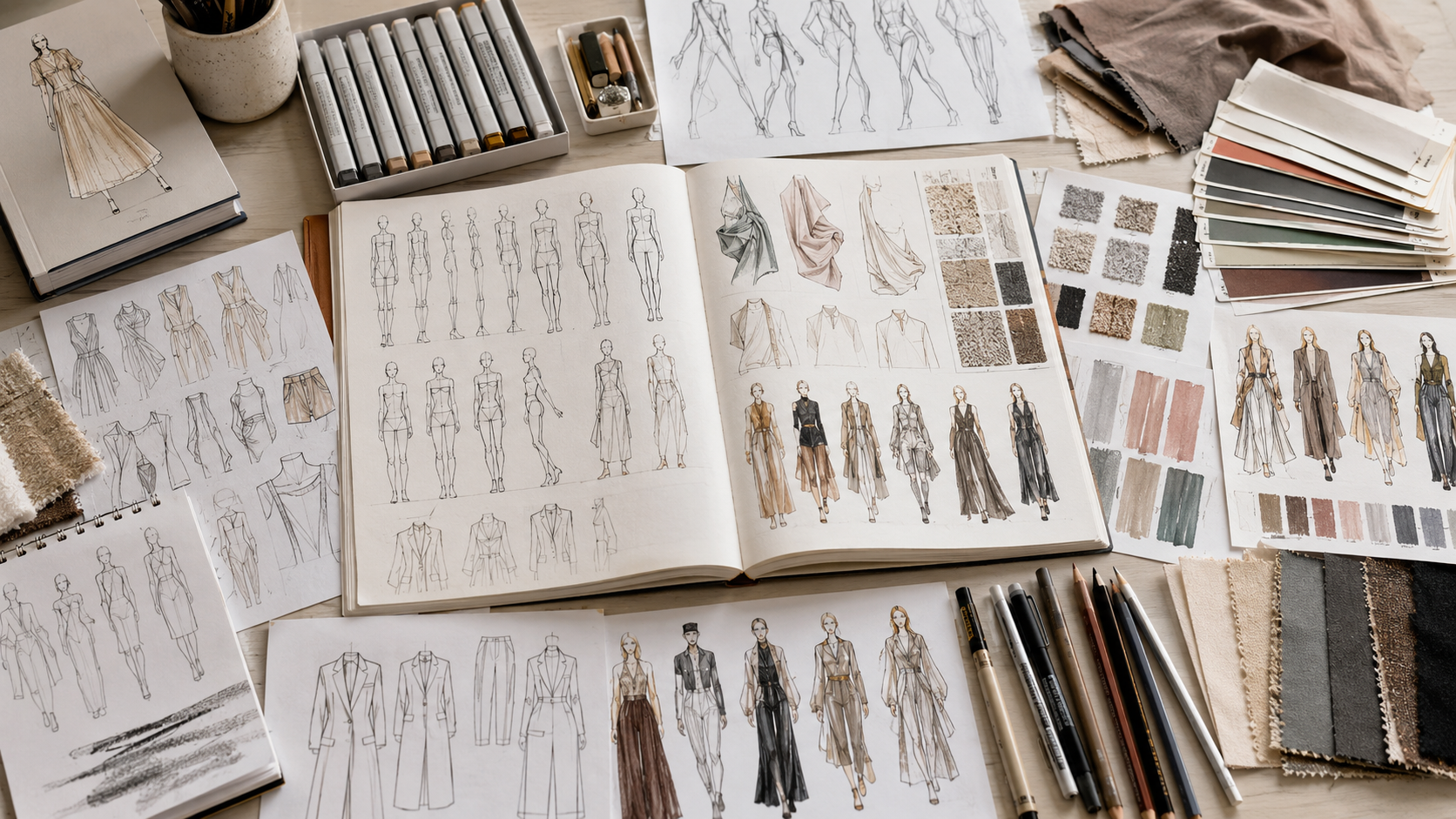
Regular sketchbook practice is one of the simplest ways to improve before applying. You can study fashion proportions, repeat poses, analyze garment shapes, and build visual confidence through daily drawing exercises. For additional practice outside lessons, a fashion illustration book can help you develop a more consistent sketching routine and prepare stronger visual material for your portfolio.
Step 4: Create 2–3 Strong Projects
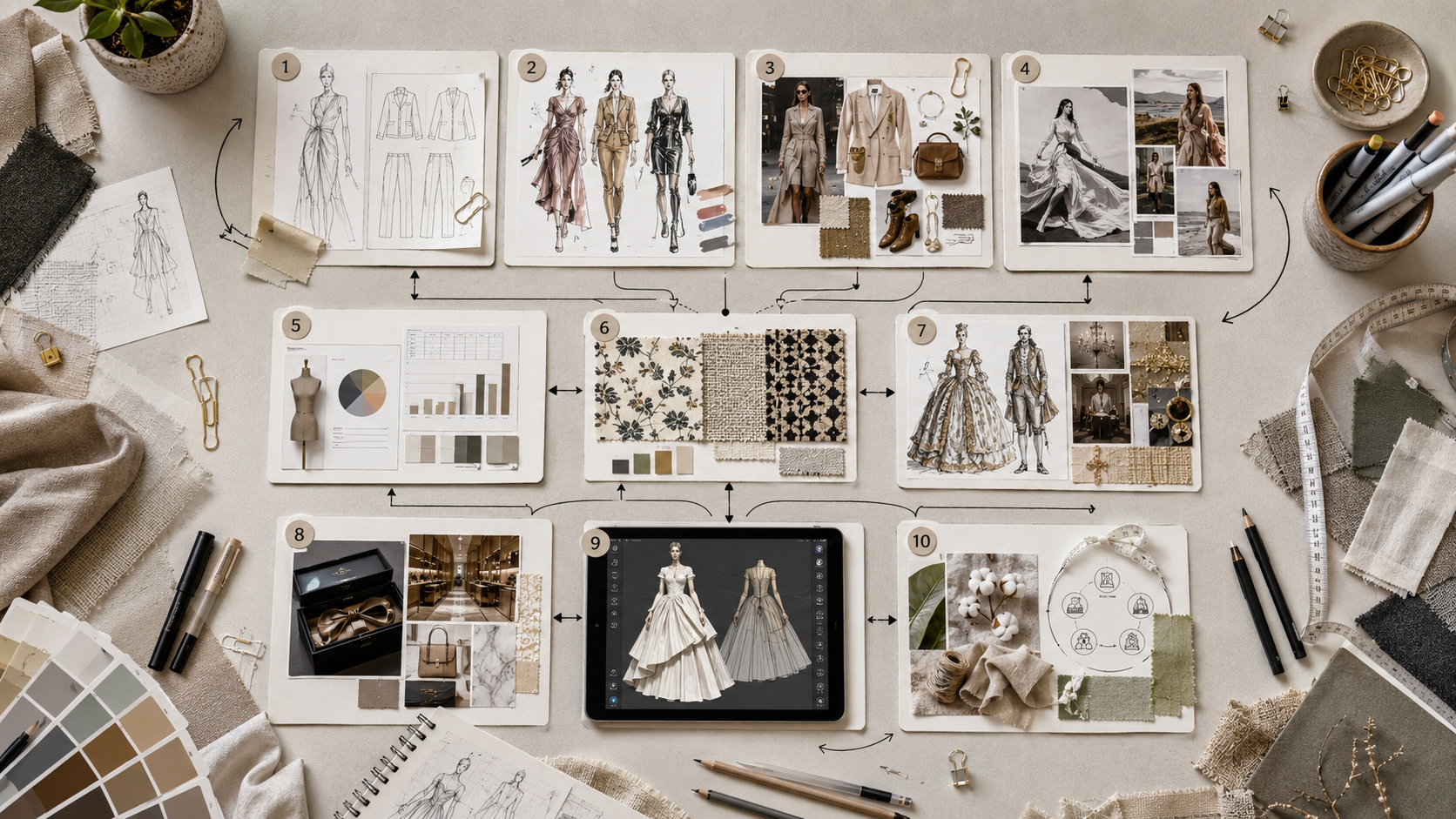
You should build a complete fashion projects instead of just adding a lot of random sketches. Each fashion project should have these things:
- a concept
- some research
- a mood board
- a color palette
- development sketches
- fabric or texture exploration
- final designs
- an explanation of what the fashion project is about.
It is better to have a portfolio with a few really good fashion projects that show clear ideas than a big portfolio with a lot of fashion projects that are not related to each other.
For example one strong fashion project might start with looking at buildings and how they are designed then try out shapes and styles include studies of different fabrics or textures and end with several fashion designs. Another fashion project might explore something that happened to you or a thing from your culture or an idea about being kind, to the earth. What is important is that the fashion project has an idea and looks like it was thought out.
For example one strong fashion project might start with looking at buildings and how they are designed then try out shapes and styles include studies of different fabrics or textures and end with several fashion designs. Another fashion project might explore something that happened to you or a thing from your culture or an idea about being kind, to the earth. What is important is that the fashion project has an idea and looks like it was thought out.
Step 5: Show Process, Not Only Final Results
Fashion schools really want to know how you think and come up with ideas. So include all your sketches, the things you tried that did not work and how you made them better. This helps the people who look at your application understand how creative you are.
This is really important, for people who do not think their final drawings are good enough yet. If you show how you worked on something it shows that you are curious have ideas and are getting better.
Before you send in your portfolio look at each project. Ask yourself: can someone understand what I was trying to do if I am not there to explain it? If the answer is no add some notes to explain make your development pages clearer or make sure your pictures tell a story.
The people who look at your application have to review a lot of portfolios in a time. So make it easy for them to understand your work: start with your idea then show what you learned then how you developed it and finally what you ended up with.
This is really important, for people who do not think their final drawings are good enough yet. If you show how you worked on something it shows that you are curious have ideas and are getting better.
Before you send in your portfolio look at each project. Ask yourself: can someone understand what I was trying to do if I am not there to explain it? If the answer is no add some notes to explain make your development pages clearer or make sure your pictures tell a story.
The people who look at your application have to review a lot of portfolios in a time. So make it easy for them to understand your work: start with your idea then show what you learned then how you developed it and finally what you ended up with.
Step 6: Prepare Your Personal Statement
Your personal statement is like a story that brings together your background and the things that interest you and the things you want to achieve. You should say why you picked this school what you want to learn more about and how the things you made show what you are trying to do with your art.
Do not just say things that could be about anyone. Try to connect what motivates you to things that happened. For example you could talk about a project you worked on a theme that you really like an artist or designer who you think is great or a skill that you want to get better at while you're, in school.
Your personal statement and your portfolio should go together. The personal statement should help the people who are deciding who gets in understand what kind of person you are and why you made the things you did.
Do not just say things that could be about anyone. Try to connect what motivates you to things that happened. For example you could talk about a project you worked on a theme that you really like an artist or designer who you think is great or a skill that you want to get better at while you're, in school.
Your personal statement and your portfolio should go together. The personal statement should help the people who are deciding who gets in understand what kind of person you are and why you made the things you did.
Step 7: Get Feedback Before Submission
You should ask for feedback from a professional before you submit your portfolio. This is a time to talk to a teacher a tutor who helps with portfolios or a fashion instructor. They can help you find the projects that're not very good the pages that are hard to understand the parts where you are missing some work or the way you present things.
It is an idea to have individual lessons now. This way you can get feedback that's just about your fashion sketches, how your projects are set up and how you present your portfolio.
It is helpful to have someone else look at your work. When you have been working on your portfolio for a time it can be hard to see what is not clear. Feedback from someone can help you make your work better and make your application stronger. You can use this feedback to make changes, to your fashion portfolio and make it the best it can be. Getting feedback on your fashion portfolio is very important.
It is an idea to have individual lessons now. This way you can get feedback that's just about your fashion sketches, how your projects are set up and how you present your portfolio.
It is helpful to have someone else look at your work. When you have been working on your portfolio for a time it can be hard to see what is not clear. Feedback from someone can help you make your work better and make your application stronger. You can use this feedback to make changes, to your fashion portfolio and make it the best it can be. Getting feedback on your fashion portfolio is very important.
Common Mistakes in Fashion College Applications
Many applicants make similar mistakes when preparing their fashion school portfolio.
They include only pretty final drawings.
They copy Pinterest or runway looks too closely.
They do not show research.
They ignore sketchbook development.
They use weak fashion figure proportions.
They submit too many unrelated works.
They forget to follow the school’s exact instructions.
They do not explain their concept clearly.
They show style but not technical understanding.
They wait until the last minute.
The strongest portfolios are personal, selective, well-edited, and conceptually clear.
One practical way to avoid these mistakes is to review your portfolio as a sequence, not as separate pages. The person viewing it should understand where the project begins, how it develops, and why the final outcome belongs to that concept.
How Long Does It Take to Prepare for Fashion College?
How Long Does It Take to Get Ready for Fashion College?
To get into a fashion college you need to prepare for a long time. It can take months or even a year. If you are already good at drawing and have some projects you might not need much time.. If you are just starting out you should give yourself a lot of time to learn how to draw clothes come up with ideas make projects for your portfolio and make your work better.
Here is what you can do:
Six to twelve months before you apply: look at schools practice drawing and start a sketchbook.
Four to six months before you apply: make projects for your portfolio. Think of new ideas.
Two to three months before you apply: look at your portfolio write a statement about yourself and get all your papers ready.
One month before you apply: make sure everything is ready check that your files are okay and get ready for interviews.
Do not wait until the month to work on your portfolio. You need time to make your projects. Also to make them better. Making your projects better is where a lot of portfolios really get good. Fashion college is very competitive so you should take your time. Make sure your portfolio is the best it can be. You are applying to fashion college so you need to make sure you have a portfolio, for fashion college.
To get into a fashion college you need to prepare for a long time. It can take months or even a year. If you are already good at drawing and have some projects you might not need much time.. If you are just starting out you should give yourself a lot of time to learn how to draw clothes come up with ideas make projects for your portfolio and make your work better.
Here is what you can do:
Six to twelve months before you apply: look at schools practice drawing and start a sketchbook.
Four to six months before you apply: make projects for your portfolio. Think of new ideas.
Two to three months before you apply: look at your portfolio write a statement about yourself and get all your papers ready.
One month before you apply: make sure everything is ready check that your files are okay and get ready for interviews.
Do not wait until the month to work on your portfolio. You need time to make your projects. Also to make them better. Making your projects better is where a lot of portfolios really get good. Fashion college is very competitive so you should take your time. Make sure your portfolio is the best it can be. You are applying to fashion college so you need to make sure you have a portfolio, for fashion college.
How Fashion Sketching Helps With a College Portfolio
Fashion sketching is really helpful when you are putting together a college portfolio. It is a way to show people your design ideas. You can use fashion sketching to show the proportion of a design, the silhouette, how it moves the details of the garment, the texture of the fabric and how it is styled.
If you want to study fashion design or fashion illustration in college fashion sketching is very useful. It helps you make development pages. You can try out silhouettes compare your design options and explain why you made certain choices.
Getting ready for fashion college is easier if you practice regularly. Some people start by drawing fashion sketches by hand while others make portfolios or do both. You can take a online fashion illustration course or fashion illustration in Procreate course or fashion illustration book, about fashion illustration to practice on your own.
The point of fashion sketching is not to copy someone Style. The point is to get better at showing your fashion ideas. Fashion sketching helps you do that.
If you want to study fashion design or fashion illustration in college fashion sketching is very useful. It helps you make development pages. You can try out silhouettes compare your design options and explain why you made certain choices.
Getting ready for fashion college is easier if you practice regularly. Some people start by drawing fashion sketches by hand while others make portfolios or do both. You can take a online fashion illustration course or fashion illustration in Procreate course or fashion illustration book, about fashion illustration to practice on your own.
The point of fashion sketching is not to copy someone Style. The point is to get better at showing your fashion ideas. Fashion sketching helps you do that.
Final Thoughts: Fashion College Preparation Is a Creative Strategy
Getting into a fashion college is not about being perfect. It is about showing that you have potential that you are curious that you can work hard and that you have your style.
Fashion college is looking for people who can think about things in a way who can do research come up with ideas draw pictures to show what they mean and get better at designing.
Your portfolio should show what you are like now and what kind of designer you could be in the future.
If you want to go to fashion college you should start by learning the basics: how to draw how to sketch clothes, how to do research how to come up with ideas and how to put together a portfolio.
Then you should look at what each college wants make a really good projects and make sure your portfolio is just right before you send it in.
You cannot make a portfolio in just one week.
You have to keep watching, practicing, trying things listening to what other people think and understanding what fashion college is looking for in students who want to attend fashion college and become a fashion designer and get a good education, at fashion college.
Fashion college is looking for people who can think about things in a way who can do research come up with ideas draw pictures to show what they mean and get better at designing.
Your portfolio should show what you are like now and what kind of designer you could be in the future.
If you want to go to fashion college you should start by learning the basics: how to draw how to sketch clothes, how to do research how to come up with ideas and how to put together a portfolio.
Then you should look at what each college wants make a really good projects and make sure your portfolio is just right before you send it in.
You cannot make a portfolio in just one week.
You have to keep watching, practicing, trying things listening to what other people think and understanding what fashion college is looking for in students who want to attend fashion college and become a fashion designer and get a good education, at fashion college.